Wave Energy in Surf Forecasts
Wave height is the first number everybody looks at, and the one that misleads most often. Wave energy combines height and period into a single figure, usually in kilojoules (kJ), that tells you how much power the swell will really bring to the coast.
Height counts twice, period counts once
The energy in a wave grows with the square of its height. Double the height and you have four times the energy, not twice. On top of that, the power a swell delivers grows in step with its period: a longer-period swell moves more water and travels faster, so more energy arrives at the beach every second. That is why forecast energy is built from height² × period.
In the Prosurfingtools conditions panel the figure is calculated as energy ≈ 35 × height² × period, with height in metres and period in seconds. Other forecast sites use their own formulas, so the numbers are not interchangeable: compare days with the same source.
Same height, very different days
| Swell | Period | Energy | What it feels like |
|---|---|---|---|
| 0.6 m | 8 s | ≈ 100 kJ | Just surfable, weak |
| 1.0 m | 8 s | ≈ 280 kJ | Small and soft |
| 1.0 m | 14 s | ≈ 490 kJ | Small but punchy |
| 1.5 m | 8 s | ≈ 630 kJ | Fun, a bit disorganised |
| 1.5 m | 14 s | ≈ 1,100 kJ | Powerful, solid sets |
| 2.0 m | 16 s | ≈ 2,240 kJ | Heavy, experienced surfers |
| 3.0 m | 15 s | ≈ 4,700 kJ | Big-wave territory at exposed spots |
Look at the 1.5 m rows: the same height, but the 14-second swell carries almost twice the energy of the 8-second one. And a 1.0 m swell at 14 seconds is close to a 1.3 m swell at 8 seconds. Height alone would have told you the wrong story both times.
Rough energy ranges
- Under ~100 kJ: barely enough for surfing at most spots.
- ~200–1000 kJ: punchy, everyday surf. Lower values suit beginners and juniors; higher values suit intermediate and advanced surfers.
- ~1000–3000 kJ: powerful. Good for experienced and competition surfers at the right spot.
- Above ~3000–5000 kJ: heavy and dangerous at exposed spots. Only for experts, or for sheltered spots that take a fraction of the energy.
These ranges are a guide, not a rule. Learn the numbers for your own spots: note the energy on days that were perfect, too small or too big, and you will soon know which range each beach works in.
What energy doesn't tell you
The forecast energy describes the swell in open water. Before it becomes a wave at your beach, three things change it:
- Direction and exposure: a spot sheltered from the swell direction receives only part of the energy.
- Seabed and tide: reefs and sandbanks concentrate or spread the energy, and the tide changes the depth they break in.
- Wind: energy says how powerful the waves are, not how clean. The wind decides that.
Using energy to plan training
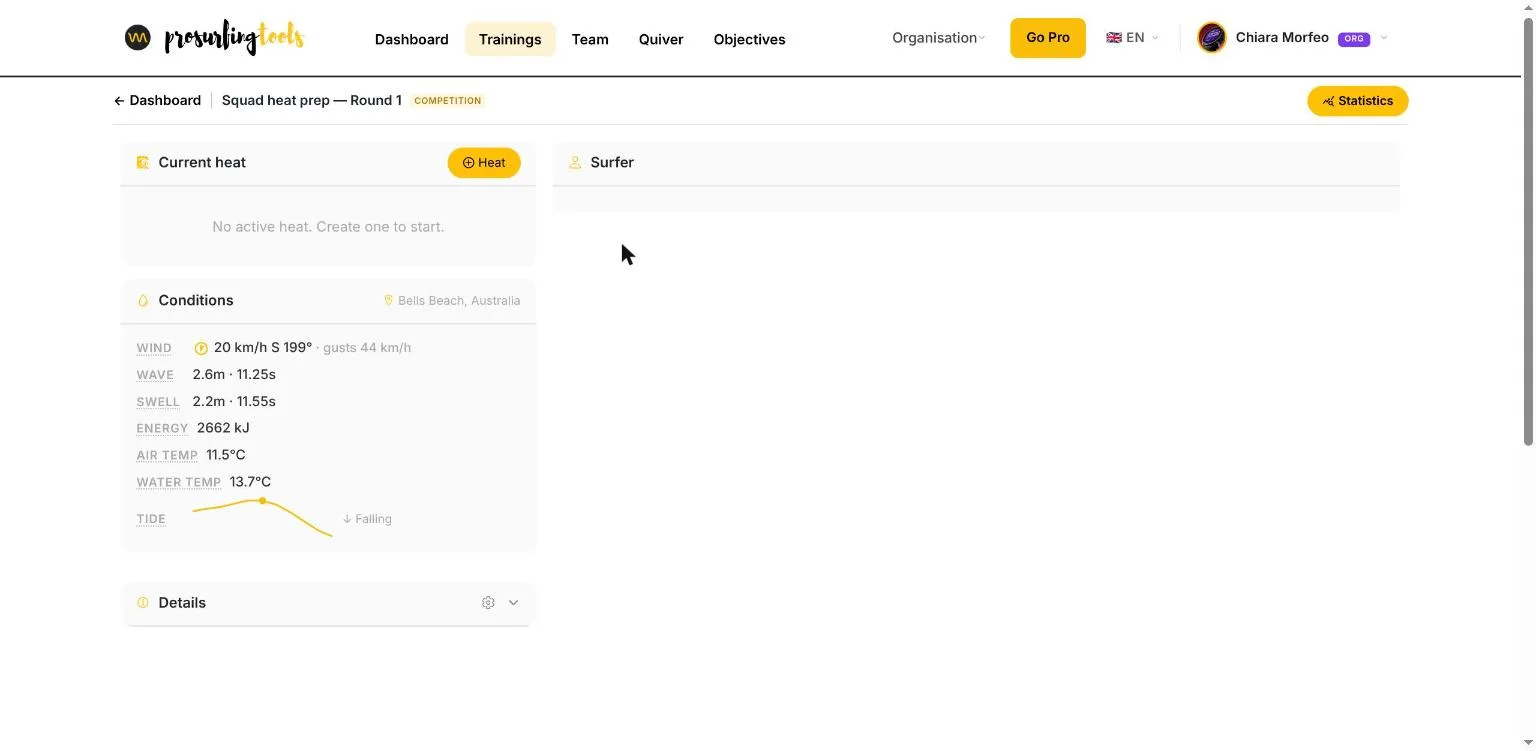
Energy is a quick way to match a session to a group. A junior group may need a day around 200–500 kJ at a friendly beach; heat simulations for competition surfers work better with enough energy for real turns and real consequences. In a Prosurfingtools training with a location, the conditions panel shows the energy next to wind, wave, swell and tide, and each finished heat stores those conditions, so over a season you can see in which energy range each surfer scores best. For the full forecast read, see How to Read a Surf Forecast.
Frequently asked questions
What does kJ mean in a surf forecast?
kJ (kilojoules) is a single number for the power of the swell, calculated from its height and its period. A higher kJ figure means more powerful waves. It is a comparison index: each forecast site uses its own formula, so compare values from the same source.
What is a good wave energy for surfing?
As a rough guide, around 100 kJ is only just surfable, 200–1000 kJ gives punchy waves for most surfers, and above 1000 kJ waves get heavy. Above 3000–5000 kJ conditions are for experienced surfers only. The right figure depends on the spot: a sheltered beach can handle much more energy than an exposed reef.
Why is wave energy more useful than wave height?
Because the height alone hides the period. A 1.0 m swell at 14 seconds carries about as much energy as a 1.3 m swell at 8 seconds, and it will break with more power. Energy puts both numbers into one, so you can compare two days at a glance.
Does wave energy include the wind?
No. The energy figure describes the swell only. The wind decides whether that energy arrives as clean or choppy waves, and the tide and the shape of the seabed decide how it breaks.
Related guides
 Swell Period Explained
 How to Read a Surf Forecast
 Offshore, Onshore and Cross-shore Wind
 How Tides Work